
A CO₂-free circular economy
 © MEH
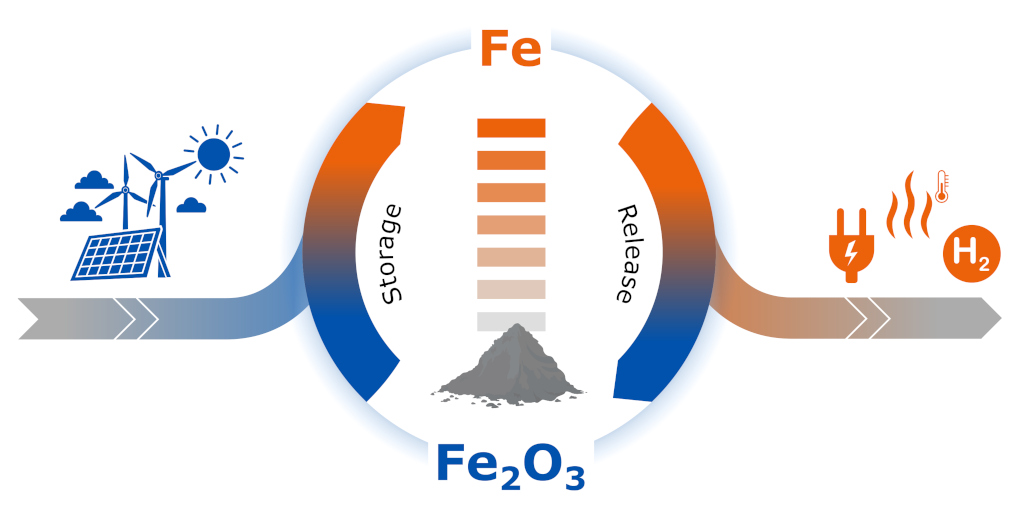
The energy transition requires innovative solutions for storing renewable energy. Reactive metals enable a sustainable energy cycle:
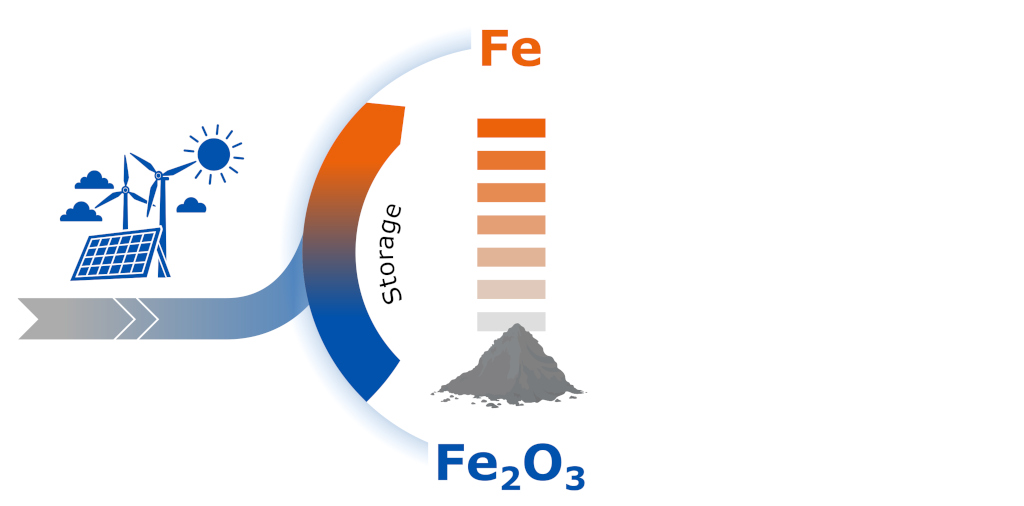
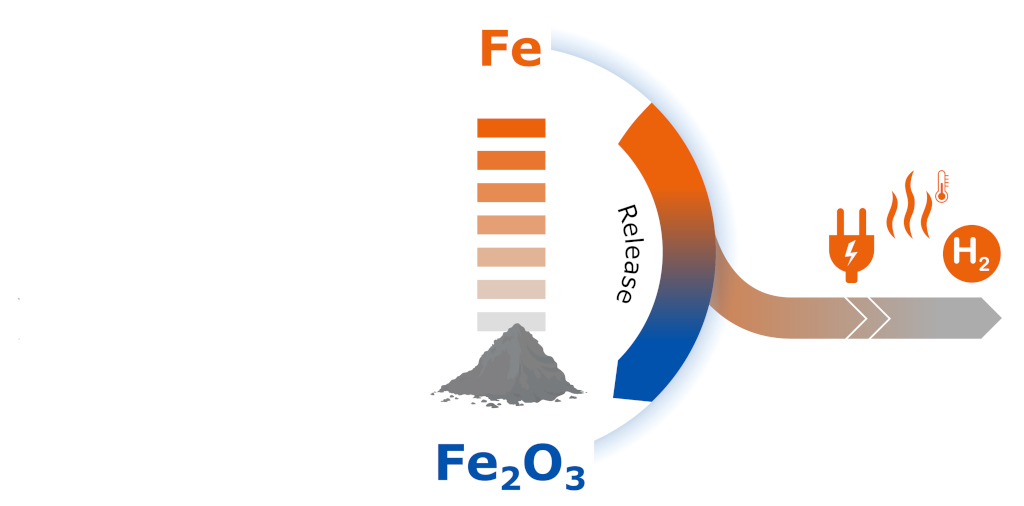
Using iron powder and its oxides as CO₂-free energy carriers, we can store wind and solar energy over long periods and release it again when needed.
Step 1
 © MEH
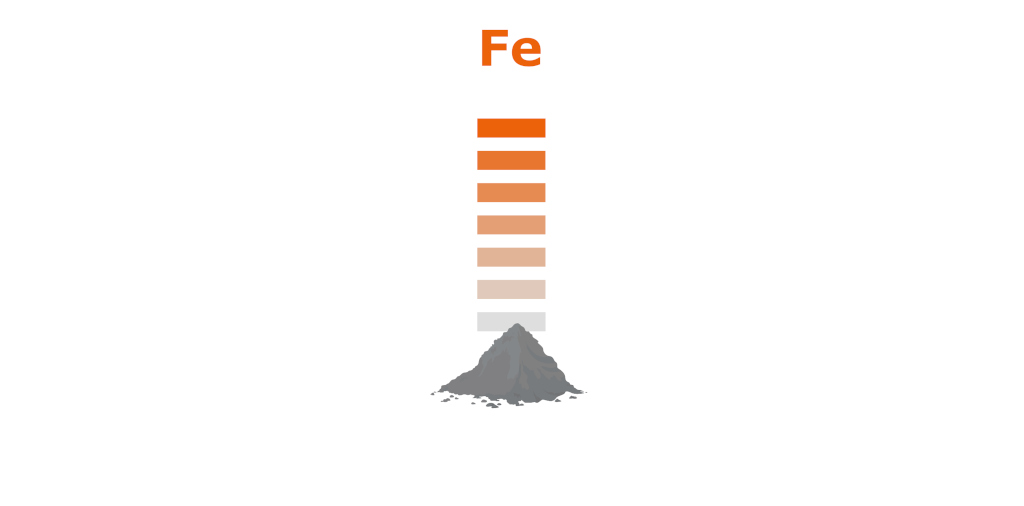
Step 2
 © MEH
Step 3
 © MEH
Step 4
© MEH We know it from sparklers and fireworks: iron powder burns with an intense orange flame. Combustion temperatures of up to 2,500 °C can be reached—ideal for electricity generation in a steam turbine, industrial processes, or district heating.
| Category | Iron Powder | Hydrogen |
|---|---|---|
| Energy density | bis zu 16,1 kWh/l | 2,61 kWh/l (liquefied) 1,33 kWh/l (700 bar) |
| spec. Energy | 2,1 kWh/kg 7,36 MJ/kg |
33,3 kWh/kg 120 MJ/kg |
| Density | 7,874 kg/l | 0,0735 kg/l (liquefied) |
| Efficiency Power-to-Heat | >55% | |
| Effciency Power-to-Power | >30% | 18–46% |
| Lifetime / storage cycles | ∞ Cycles | |
| Self-discharge | none | liquefied: up to 1% per day |
| Particle Size | 20–250 µm | — |
Since 2020, numerous activities focusing on metal energy carriers have been developed at TU Darmstadt. The focus is on iron and aluminum, owing to their broad range of applications, good availability, and high energy density.
Building on the successful Clean Circles cluster project, these activities range from fundamental research to application-oriented transfer activities. As a central technology and transfer platform, the Metal Energy Hub brings these activities together and coordinates them.